
Is this guide for you?
- You want a pillow that contours to your head and neck rather than a flat fill
- You sleep hot on your current foam pillow and want to know if there's a better option
- You've heard memory foam is good for neck pain and want to know if it applies to you
- You want to understand the difference between solid, shredded, and contour foam
Quick Buy
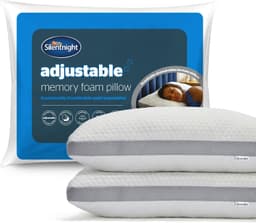
Silentnight Silentnight Adjustable Memory Foam Pillow
Built for contouring support with adjustable memory foam fill.
We use Silentnight Adjustable Memory Foam here because memory foam buyers usually want contouring plus adjustability.
Approx. £44.99/item
Read full guide for this topic →View on AmazonWant the full pillow overview first?
If you want to compare the whole landscape before reading a specific guide, start with our central best pillow page.
Read: Best Pillow guide →How the matching quiz works
- Answer a few quick questions about how you sleep
- We match against pillows verified on UK Amazon, scoring on fit, temperature and budget
- Get a shortlist with reasons — not a single pushed product
The three types of memory foam pillow
1. Solid block memory foam
A single moulded piece of foam, usually rectangular or contour-shaped. It holds a fixed loft and shape. Best for sleepers who stay in one position and want consistent support. Disadvantage: retains heat (unless open-cell), cannot be adjusted, and some people find the 'stuck' feeling uncomfortable when changing position.
2. Shredded memory foam
Loose pieces of foam inside a fabric shell, usually with a zip closure for adding or removing fill. More breathable than solid foam. Adjustable loft. Better for combination sleepers. The fill redistributes as you move. Disadvantage: can clump unevenly and may need reshaping in the morning.
3. Contour memory foam
A solid foam pillow with a wave or butterfly profile — lower in the centre where the head rests, higher at the edges where the neck sits. Designed specifically for back sleepers to maintain cervical lordosis. Less versatile for other positions.
Who memory foam suits — and who it doesn't
Memory foam suits back sleepers who want consistent cervical support (contour) and combination sleepers who want adjustable fill (shredded). It is often poor for stomach sleepers because solid foam doesn't compress freely. It is adequate for side sleepers if the loft is correct, but latex is usually a better match for side sleeping because it's more responsive.
The heat problem — and solutions
Standard solid memory foam sleeps warm. Open-cell memory foam is meaningfully cooler. Shredded foam is cooler still. Gel infusions provide initial cooling that fades after 2–3 hours. If heat is a concern, prioritise open-cell or shredded foam over gel infusions, and pair with a bamboo or percale cotton cover rather than polyester.
Lifespan and replacement
Good quality memory foam pillows last 3–5 years. Signs it needs replacing: it no longer springs back after being pressed, it has a permanent indentation, or you're regularly waking with neck stiffness that wasn't there when the pillow was new. Cheaper memory foam pillows (under £20) often degrade within 12 months.
Ready to skip the research?
Answer a few quick questions and we'll match you to pillows that fit your build, position and budget.
Start the 2-minute quizWhat our quiz looks at
- Whether you want solid (consistent), shredded (adjustable), or contour (back sleepers)
- Your sleep temperature — open-cell is noticeably cooler than standard foam
- Your sleep position
- Budget — quality memory foam starts around £30 in the UK; under £20 tends to degrade quickly
- Whether hypoallergenic matters (foam is naturally resistant to dust mites)
Frequently asked questions
Is solid or shredded memory foam better?
It depends on your sleep position. Solid foam suits consistent back sleepers who want fixed support. Shredded foam suits combination sleepers who want adjustable loft and better breathability. Neither is universally better.
Does memory foam help with neck pain?
Contour memory foam can help back sleepers maintain cervical alignment. For side sleepers, having the right loft matters more than fill type — a high-loft firm pillow of any material usually works better than a contour foam designed for back sleeping.
Why does memory foam sleep so hot?
Standard solid memory foam restricts airflow, so body heat builds up. Open-cell foam is significantly cooler. Shredded foam is cooler still. If heat is your main complaint about memory foam, switch to open-cell or shredded rather than abandoning foam entirely.
How long does a memory foam pillow last?
3–5 years for quality foam (£40+). Budget foam (under £20) typically degrades within 12–18 months. If your foam pillow no longer springs back when pressed, it's due for replacement.
Last reviewed: 30 April 2026. We update this guide when our verified pillow catalogue changes.