Is this guide for you?
- You're replacing a pillow and unsure whether to go firmer or softer
- Your current pillow feels roughly right but you wake with occasional stiffness
- You've heard conflicting advice about whether firm or soft is better for sleep
- You want to understand the logic before taking the quiz
Jump to a section
Quick verdict
If you want the shortest route to the right choice, start here.
- Prioritise your sleep position — the primary driver.
- Prioritise your body size — heavier sleepers generally need firmer for the same position.
- Prioritise whether you've identified existing neck or shoulder pain.
Best options at a glance
These options cover the most common buying paths for firm vs soft: strongest baseline fit, value route, and a balanced upgrade path.
#1 · Best overall fit for this profile
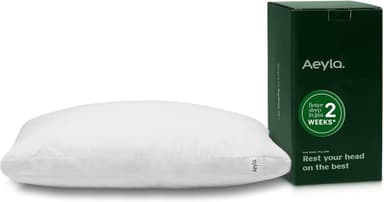
Aeyla Aeyla Dual Pillow Adjustable 2-in-1
Best for combination sleepers who want structured support.
Included for better heat control and overnight comfort consistency.
Approx. £58.74/item
#2 · Best value alternative
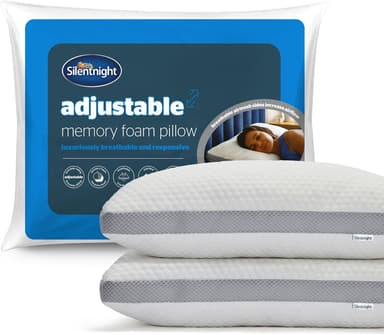
Silentnight Silentnight Adjustable Memory Foam Pillow
Best for combination sleepers who want structured support.
Included for better heat control and overnight comfort consistency.
Approx. £44.99/item
#3 · Best upgrade alternative
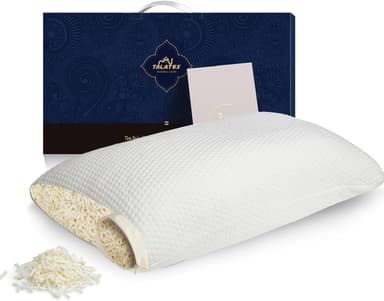
Talatex Talatex Adjusted Cervical Pillow
Best for side sleepers who want structured support.
Included for allergy-aware materials and easier maintenance.
Approx. £59.99/item
How we ranked these options
We rank these options by fit for firm vs soft, combining support profile, temperature behavior, and value for money. The goal is to improve sleep comfort and consistency first, then refine feel preferences.
- Your sleep position — the primary driver
- Your body size — heavier sleepers generally need firmer for the same position
- Whether you've identified existing neck or shoulder pain
Quick Buy
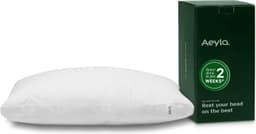
Aeyla Aeyla Dual Pillow Adjustable 2-in-1
Built for comparing firmer and softer feels with adjustable support.
We use Aeyla here because dual-sided adjustability is the cleanest way to compare firmness feel.
Approx. £58.74/item
Read full guide for this topic →Buy Aeyla nowWant the full pillow overview?
If you want to compare the whole landscape before reading a specific guide, start with our central best pillow page.
Read: Best Pillow guide →How the matching quiz works
- Answer a few quick questions about how you sleep
- We match against pillows verified on UK Amazon, scoring on fit, temperature and budget
- Get a shortlist with reasons — not a single pushed product
Why sleep position drives firmness
Firmness in a pillow is really a proxy for two things: how far the pillow compresses under head weight, and whether it holds its shape over 8 hours. Side sleepers apply more lateral pressure and need the pillow to resist compression — this means firm. Back sleepers apply vertical pressure over a larger area and need medium resistance. Stomach sleepers need the pillow to compress almost entirely — this means soft. Starting with position before preference is always the right order.
Position-by-position guide
Side sleepers → medium-firm to firm
The pillow needs to fill a 10–14 cm gap and resist compression under head weight for 8 hours. Soft pillows collapse and let the head drop. Firm is not just preferred for side sleepers — it's functionally required for good alignment.
Back sleepers → medium
Back sleepers need a pillow that provides some support without pushing the chin forward. Medium firmness — enough to maintain the cervical curve, not so firm that it elevates the head — is the target. A medium-firm contour pillow is the most reliable choice.
Stomach sleepers → soft
Stomach sleepers need a pillow that compresses almost flat. A firm pillow holds the head up in an already-rotated position, making neck strain worse. Soft — or no pillow at all — is the functional requirement.
Combination sleepers → medium, adjustable
Combination sleepers need a compromise. Medium firmness causes the least harm across positions. Adjustable-fill pillows (shredded foam or hollow fibre with a zip) let you fine-tune until you find the right balance.
When personal preference overrides position
If you've used a correctly-lofted firm pillow for your sleep position and genuinely find it uncomfortable — not just unfamiliar — your preference is valid data. Some side sleepers with lower body weight find that a medium-firm pillow provides enough support because their head is lighter. The position-first rule is a starting point, not a constraint. The quiz uses both position and preference together.
How firmness and loft interact
A firm low-loft pillow and a firm high-loft pillow are completely different sleeping experiences. Firmness tells you how far the pillow compresses; loft tells you how high it starts. A firm pillow with the wrong loft is just as bad as a soft pillow with the wrong loft. Both variables matter, and they're independent.
Ready to skip the research?
Answer a few quick questions and we'll match you to pillows that fit your build, position and budget.
Start the 2-minute quizWhat our quiz looks at
- Your sleep position — the primary driver
- Your body size — heavier sleepers generally need firmer for the same position
- Whether you've identified existing neck or shoulder pain
- Whether you want fixed firmness or adjustable fill
- Budget — firm and soft options exist at all price points
Frequently asked questions
Is a firm or soft pillow better for sleep?
Neither is universally better — it depends almost entirely on your sleep position. Side sleepers need firm. Stomach sleepers need soft. Back sleepers need medium. Choosing based on preference alone often leads to mismatched support.
Can a pillow that's too soft cause back pain?
Pillow choice most directly affects the neck and upper back. A too-soft pillow for a side sleeper causes the head to drop, which strains the cervical spine and can radiate to the upper back and shoulders.
What if the recommended firmness doesn't feel comfortable?
Give it one to two weeks. Adjusting to a correctly-matched pillow after years of the wrong firmness can initially feel unfamiliar. If discomfort persists beyond two weeks, use the quiz to check whether the loft rather than the firmness is the issue.
Does pillow firmness affect how hot I sleep?
Indirectly. Firm solid memory foam tends to trap more heat than soft hollow fibre or shredded foam. If you need firm support but sleep warm, look for firm latex or open-cell memory foam rather than standard solid foam.
Last reviewed: 30 April 2026. We update this guide when our verified pillow catalogue changes.
Generated with GitHub Copilot.