
Is this guide for you?
- You've tried memory foam and find it either too hot or too rigid
- You want a pillow that's naturally cool and hypoallergenic
- You're prepared to invest in a longer-lasting pillow (5+ years)
- You prefer a responsive, bouncy feel to memory foam contouring
Jump to a section
Quick verdict
If you want the shortest route to the right choice, start here.
- Prioritise sleep temperature — latex is one of the coolest pillow options.
- Prioritise solid vs shredded — shredded is more adjustable, better for combination sleepers.
- Prioritise natural vs synthetic — performance is similar; it's mainly an eco/cost choice.
Best options at a glance
These options cover the most common buying paths for latex pillows: strongest baseline fit, value route, and a balanced upgrade path.
#1 · Best overall fit for this profile
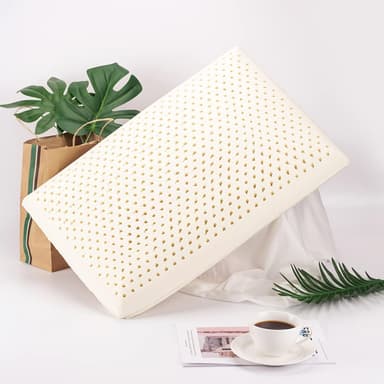
Talatex Talatex Natural Dunlop Latex Pillow
Best for side sleepers who want structured support.
Included for better heat control and overnight comfort consistency.
Approx. £69.99/item
#2 · Best value alternative
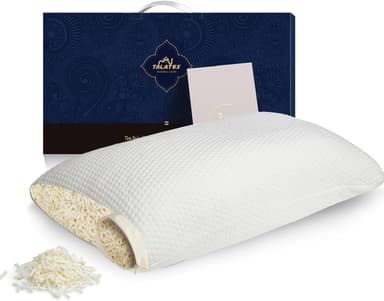
Talatex Talatex Adjusted Cervical Pillow
Best for side sleepers who want structured support.
Included for allergy-aware materials and easier maintenance.
Approx. £59.99/item
#3 · Best upgrade alternative
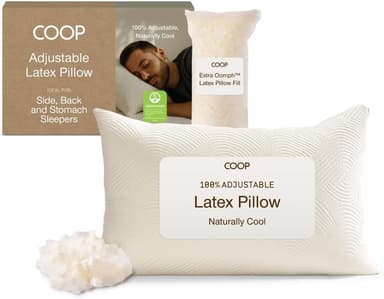
Coop Home Goods Coop Home Goods Adjustable Latex Pillow
Best for multiple sleep positions who want structured support.
Included for better heat control and overnight comfort consistency.
Check latest price
How we ranked these options
We rank these options by fit for latex pillows, combining support profile, temperature behavior, and value for money. The goal is to improve sleep comfort and consistency first, then refine feel preferences.
- Sleep temperature — latex is one of the coolest pillow options
- Solid vs shredded — shredded is more adjustable, better for combination sleepers
- Natural vs synthetic — performance is similar; it's mainly an eco/cost choice
Quick Buy
Talatex Talatex Natural Dunlop Latex Pillow
Built for breathable latex support and springy resilience.
We use Talatex here because this page is about latex support and airflow.
Approx. £69.99/item
Read full guide for this topic →Buy Talatex nowWant the full pillow overview?
If you want to compare the whole landscape before reading a specific guide, start with our central best pillow page.
Read: Best Pillow guide →How the matching quiz works
- Answer a few quick questions about how you sleep
- We match against pillows verified on UK Amazon, scoring on fit, temperature and budget
- Get a shortlist with reasons — not a single pushed product
What latex is and why it matters
Latex is a natural or synthetic rubber material that's been processed into foam. It's inherently hypoallergenic — dust mites cannot colonise latex the way they do natural fills. It's naturally breathable and doesn't retain body heat the way memory foam does. It's responsive — it compresses under pressure and immediately springs back rather than slowly reshaping. This responsiveness means it adapts quickly as you change position through the night.
Natural vs synthetic latex
Natural latex
Sourced from rubber tree sap, processed and whipped into foam. Slightly more breathable and eco-conscious than synthetic latex. It can have a faint natural rubber odour (which typically dissipates within a week). It's certified in some products (GOLS — Global Organic Latex Standard). More expensive than synthetic latex but lasts longer — typically 5–7 years.
Synthetic latex
Petroleum-derived latex created in a laboratory. Chemically indistinguishable in performance from natural latex — both are hypoallergenic and breathable. Synthetic latex is cheaper and odourless. Lifespan is typically 4–6 years. The choice between natural and synthetic is often philosophical (eco-impact) rather than performance-based.
Types of latex pillow
Solid latex block
A single piece of latex foam, usually with a contour or traditional shape. Holds a fixed loft and responsiveness. Best for sleepers who stay in one position. Cannot be adjusted.
Shredded latex
Loose pieces of latex in a fabric shell with a zip closure. More adjustable than solid; you can add or remove shreds to dial in loft. Better for combination sleepers. More breathable than solid latex because air gaps between shreds improve airflow.
Pinhole latex
Latex foam that's been perforated with small holes to improve airflow. This is a special manufacturing process; most pinhole latex is in higher-end pillows. It's noticeably cooler than non-pinhole latex and is the ideal option for hot sleepers.
Who latex suits — and who it doesn't
Latex suits hot sleepers, people with dust mite allergy, and those who prefer a responsive rather than conforming feel. It's expensive, so it's usually chosen by people replacing cheaper pillows every 18 months with something that lasts 5+ years. Latex doesn't suit people with latex allergies (rare, but real), and it's overkill if a well-matched standard pillow does the job.
Lifespan and value
A £80–120 natural latex pillow lasting 6 years costs approximately £13–20 per year — comparable to replacing a £25 hollow-fibre pillow annually. The per-year cost is similar, but you get superior comfort and consistency for five years rather than replacing and readjusting every 18 months.
Ready to skip the research?
Answer a few quick questions and we'll match you to pillows that fit your build, position and budget.
Start the 2-minute quizWhat our quiz looks at
- Sleep temperature — latex is one of the coolest pillow options
- Solid vs shredded — shredded is more adjustable, better for combination sleepers
- Natural vs synthetic — performance is similar; it's mainly an eco/cost choice
- Your sleep position — latex works well for all positions
- Budget — latex pillows start around £50 in the UK; premium options £100+
- Whether you have latex allergy (rare, but essential to rule out)
Frequently asked questions
How long do latex pillows last?
Properly cared for, natural latex lasts 5–7 years. Synthetic latex typically lasts 4–6 years. This is significantly longer than memory foam (3–5 years) or hollow fibre (18–24 months).
Is natural latex better than synthetic latex?
Performance-wise, they're nearly identical — both are hypoallergenic, cool, and responsive. Natural latex is slightly more breathable and eco-conscious; synthetic is cheaper and always odourless. The choice is mostly personal.
Do latex pillows smell?
Natural latex can have a faint rubber smell that typically dissipates within a week. Synthetic latex is odourless. Some people find the natural latex smell pleasant; others prefer to air it out thoroughly.
Is latex pillow better for neck pain?
Latex is excellent for neck pain when the loft is correct — its responsiveness means it maintains support throughout the night without the 'stuck' feeling some people get with solid memory foam. But the loft and firmness matter more than the material.
Can someone with a latex allergy use a latex pillow?
No. Latex allergy, while rare (typically <1% of the population), requires avoidance of latex products. Synthetic latex is not suitable either if the allergy is to the material itself (though some react only to natural latex). Always confirm you don't have a latex allergy before purchasing.
Last reviewed: 16 June 2026. We update this guide when our verified pillow catalogue changes.
Generated with GitHub Copilot.