Is this guide for you?
- You wake congested, sneezing, or with itchy eyes most mornings
- Symptoms ease within an hour of getting up
- You have a known dust mite allergy or hay fever
- Your pillow is over 2 years old and has never been hot-washed
Jump to a section
Quick verdict
If you want the shortest route to the right choice, start here.
- Prioritise whether you have a confirmed dust mite allergy or general sensitivity.
- Prioritise your preference for synthetic vs foam vs latex fills.
- Prioritise whether machine-washable at 60°C is essential.
Best options at a glance
These options cover the most common buying paths for allergies: strongest baseline fit, value route, and a balanced upgrade path.
#1 · Best overall fit for this profile
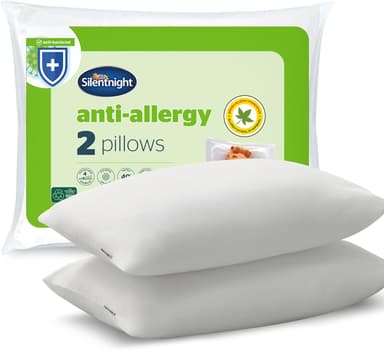
Silentnight Silentnight Anti Allergy Pillow 2 Pack
Best for side sleepers who want balanced comfort.
Included for allergy-aware materials and easier maintenance.
Approx. £8/item
#2 · Best value alternative
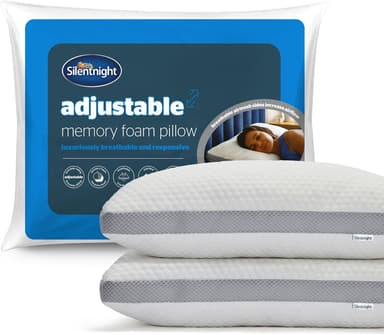
Silentnight Silentnight Adjustable Memory Foam Pillow
Best for combination sleepers who want structured support.
Included for better heat control and overnight comfort consistency.
Approx. £44.99/item
#3 · Best upgrade alternative
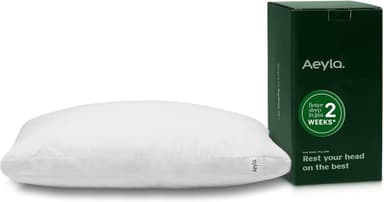
Aeyla Aeyla Dual Pillow Adjustable 2-in-1
Best for combination sleepers who want structured support.
Included for better heat control and overnight comfort consistency.
Approx. £58.74/item
How we ranked these options
We rank these options by fit for allergies, combining support profile, temperature behavior, and value for money. The goal is to improve sleep comfort and consistency first, then refine feel preferences.
- Whether you have a confirmed dust mite allergy or general sensitivity
- Your preference for synthetic vs foam vs latex fills
- Whether machine-washable at 60°C is essential
Quick Buy
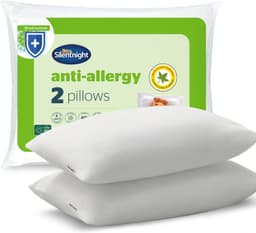
Silentnight Silentnight Anti Allergy Pillow 2 Pack
Built for hypoallergenic hollowfibre and allergy-first buying.
We use Silentnight Anti Allergy here because allergy-first shoppers need a hypoallergenic baseline.
Approx. £8/item
Read full guide for this topic →Buy Silentnight nowWant the full pillow overview?
If you want to compare the whole landscape before reading a specific guide, start with our central best pillow page.
Read: Best Pillow guide →How the matching quiz works
- Answer a few quick questions about how you sleep
- We match against pillows verified on UK Amazon, scoring on fit, temperature and budget
- Get a shortlist with reasons — not a single pushed product
Fill types compared for allergy sufferers
Hollow fibre and microfibre
The best choice for most allergy sufferers. Synthetic fills are less hospitable to dust mites, can be washed at 60°C (which kills mites), and dry quickly. Look for fills labelled 'anti-allergy' or 'hypoallergenic' — these have been treated to resist mite colonisation.
Memory foam and latex
Both are inhospitable to dust mites because the fill structure doesn't allow mites to burrow in. Memory foam pillows should be spot-cleaned (not machine washed); latex is naturally antimicrobial and anti-dust-mite. Latex is one of the best long-term options for allergy sufferers.
Down and natural feather
Higher risk for allergy sufferers. Even 'hypoallergenic' down has been washed to remove allergens, but the structure still supports mite colonisation over time. If you prefer down, pair it with an anti-allergy barrier cover and wash the pillow every 6 months at 60°C.
The cover matters as much as the fill
An anti-allergy barrier pillowcase sits between the pillow and your standard pillowcase. It's made from tightly-woven fabric with pores smaller than dust mite droppings, physically blocking the allergens from reaching your face even if the pillow itself is colonised. Barrier covers are recommended by Allergy UK and are a cost-effective first step if you don't want to replace your pillow immediately. Look for covers with a certified pore size of 6 microns or smaller.
Washing and maintenance
Washing at 60°C kills dust mites. Most hollow-fibre pillows can be washed at this temperature — check the care label. Memory foam cannot be machine washed. Dry thoroughly after washing — damp fill recolonises quickly. Replace pillows every 18–24 months. Mite populations rebuild over time regardless of how frequently you wash.
Ready to skip the research?
Answer a few quick questions and we'll match you to pillows that fit your build, position and budget.
Start the 2-minute quizWhat our quiz looks at
- Whether you have a confirmed dust mite allergy or general sensitivity
- Your preference for synthetic vs foam vs latex fills
- Whether machine-washable at 60°C is essential
- Your sleep position — allergy-safe options exist for all positions
- Budget — effective anti-allergy pillows start from around £20 in the UK
Frequently asked questions
What pillow fill is best for dust mite allergy?
Hollow fibre or microfibre synthetic fills are the most practical — they can be washed at 60°C which kills dust mites. Latex is also excellent; it's naturally inhospitable to mites. Memory foam is moderate — mites can't burrow in, but you can't hot-wash the fill.
Do hypoallergenic pillows actually work?
Yes, provided you also use a barrier cover and wash regularly. The hypoallergenic fill reduces initial mite colonisation, but without a cover and regular washing, populations build up over time in any pillow.
How often should I wash my pillow if I have allergies?
Every 2–3 months at 60°C for synthetic fills. Mites are killed at temperatures above 55°C. Always dry thoroughly before use.
Can a pillow cause hay fever symptoms?
Dust mite allergy symptoms — congestion, sneezing, itchy eyes — overlap with hay fever symptoms and are often mistaken for it. If symptoms are worse on waking and improve within an hour, dust mites are the more likely cause.
Last reviewed: 30 April 2026. We update this guide when our verified pillow catalogue changes.
Generated with GitHub Copilot.