
Is this guide for you?
- You regularly wake with a stiff or aching neck
- The discomfort is mostly on one side (the side you sleep on)
- Your neck feels better after a few hours of being upright
- You've never found a pillow that doesn't cause some neck tightness
Jump to a section
Quick verdict
If you want the shortest route to the right choice, start here.
- Prioritise your sleep position — this drives loft and firmness choices more than anything else.
- Prioritise whether you want a contour shape or a standard flat pillow.
- Prioritise temperature — contour memory foam can sleep warm.
Best options at a glance
These options cover the most common buying paths for neck pain: strongest baseline fit, value route, and a balanced upgrade path.
#1 · Best overall fit for this profile

Glückstoff Glückstoff Orthopedic Neck Pillow
Best for multiple sleep positions who want structured support.
Included for allergy-aware materials and easier maintenance.
Approx. £69.9/item
#2 · Best value alternative
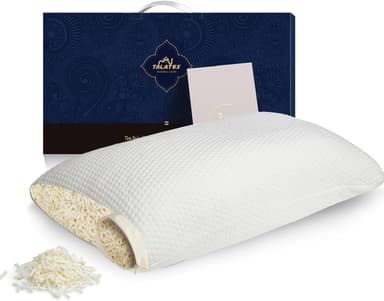
Talatex Talatex Adjusted Cervical Pillow
Best for side sleepers who want structured support.
Included for allergy-aware materials and easier maintenance.
Approx. £59.99/item
#3 · Best upgrade alternative
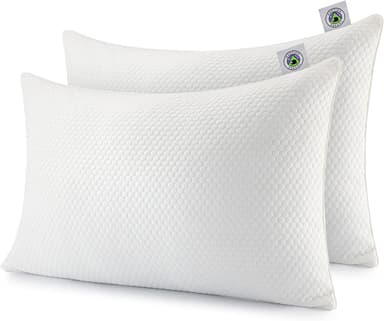
Martian Dreams Martian Dreams LunaCore Hybrid Pillow 2 Pack
Best for side sleepers who want structured support.
Included for better heat control and overnight comfort consistency.
Approx. £23.5/item
Best Pillows for Neck Pain Compared
| Pillow | Fill | Firmness | Why Included | Price Check |
|---|---|---|---|---|
| Glückstoff Glückstoff Orthopedic Neck Pillow | Memory Foam | firm | Included for allergy-aware materials and easier maintenance. | Check current price |
| Talatex Talatex Adjusted Cervical Pillow | Latex | firm | Included for allergy-aware materials and easier maintenance. | Check current price |
| Martian Dreams Martian Dreams LunaCore Hybrid Pillow 2 Pack | Hybrid | firm | Included for better heat control and overnight comfort consistency. | Check current price |
How we ranked these options
We rank these options by fit for neck pain, combining support profile, temperature behavior, and value for money. The goal is to improve sleep comfort and consistency first, then refine feel preferences.
- Your sleep position — this drives loft and firmness choices more than anything else
- Whether you want a contour shape or a standard flat pillow
- Temperature — contour memory foam can sleep warm
Quick Buy

Glückstoff Glückstoff Orthopedic Neck Pillow
Built for firmer cervical support and more structured neck alignment.
We use Glückstoff here because the page is about structured cervical support.
Approx. £69.9/item
Read full guide for this topic →Buy Glückstoff nowWant the full pillow overview?
If you want to compare the whole landscape before reading a specific guide, start with our central best pillow page.
Read: Best Pillow guide →How the matching quiz works
- Answer a few quick questions about how you sleep
- We match against pillows verified on UK Amazon, scoring on fit, temperature and budget
- Get a shortlist with reasons — not a single pushed product
How pillows cause morning neck pain
The cervical spine has a natural forward curve called lordosis. A correctly-matched pillow maintains that curve through the night. An incorrect pillow — too high, too low, or too soft — pushes the head out of alignment for 6–8 hours. The muscles and ligaments supporting the neck then spend those hours in a stretched or compressed state, producing the familiar morning stiffness. This is mechanical, not medical, and is almost always addressable by matching the pillow to the position.
Position first, then pillow
Side sleeping
Side sleepers need a firm, high-loft pillow (10–14 cm compressed) to fill the shoulder-to-ear gap. Using a pillow that's too soft or too thin is the most common cause of side-sleeping neck pain. The head drops, the upper neck stretches, and the muscles spend the night compensating.
Back sleeping
Back sleepers need a medium-loft pillow (6–9 cm) that supports the cervical curve without pushing the chin forward. Contour memory foam — with extra fill at the neck area — is specifically designed for this and is one of the more evidence-backed options for morning neck pain in back sleepers.
Stomach sleeping
Stomach sleeping is the position most associated with pillow-related neck pain, because the neck is rotated and slightly compressed regardless of pillow choice. A very flat pillow (2–5 cm) reduces the problem; no head pillow at all can be the best option for some stomach sleepers.
Quick comparison: best pillow type by neck stiffness profile
Use this as a fast decision layer before deep-diving into materials. For side-sleeper neck stiffness, start with a firm high-loft pillow (10-14 cm compressed) to keep the head level with the spine. For back-sleeper stiffness, start with a medium-loft contour pillow (6-9 cm) that supports the cervical curve without pushing the chin forward. For mixed-position stiffness, choose a responsive medium-loft option that stays supportive when you roll. Prioritise position-fit first, then material and budget.
Fill types and neck support
Memory foam contour pillows are the most widely recommended for neck pain because they hold a fixed, cervical-curve-friendly shape all night. Solid memory foam is most consistent; shredded foam is more adjustable but may shift position during sleep. Latex contour pillows offer similar benefits with better breathability and a longer lifespan, though at a higher price point. High fill-power down and hollow fibre can work well for back sleepers but are less reliable for side sleepers with active neck issues, because fill redistributes under sustained pressure.
What to prioritise if you have neck and shoulder pain
Pillow for neck and shoulder pain queries usually point to the same root issue: the head is not being held at the correct height relative to the shoulders. For side sleepers, this usually means the pillow is too low once compressed, so the shoulder takes extra pressure and the neck bends downward. For back sleepers, the pillow is often too high, pushing the chin forward and tightening the upper traps. If both the neck and shoulder hurt in the morning, prioritise correct loft first, then firmness second. For many adults that means a firmer high-loft pillow for side sleeping or a medium contour pillow for back sleeping.
When a pillow won't fix it
A correctly-matched pillow stops a pillow from being the cause of neck pain. If your pain has a different root cause — previous injury, disc issues, posture during the day — a new pillow will help but may not eliminate the pain entirely. If you've switched to a correctly-lofted pillow and neck pain persists beyond two to three weeks, a physiotherapist can assess whether the cause is positional or structural.
Ready to skip the research?
Answer a few quick questions and we'll match you to pillows that fit your build, position and budget.
Start the 2-minute quizWhat our quiz looks at
- Your sleep position — this drives loft and firmness choices more than anything else
- Whether you want a contour shape or a standard flat pillow
- Temperature — contour memory foam can sleep warm
- Budget — good options for neck pain exist from £30 to £120 in the UK
- Whether you need machine-washable or hypoallergenic
Frequently asked questions
What is the best pillow for neck stiffness?
The best starting choice depends on sleep position: side sleepers usually need a firmer high-loft pillow, while back sleepers usually need a medium-loft contour shape. Position-fit and loft are more important than brand.
Can the wrong pillow cause neck pain?
Yes — specifically, a pillow that's the wrong height for your sleep position keeps the cervical spine out of alignment for the entire night. Switching to a correctly-lofted pillow resolves this cause of pain, though it won't address neck pain from other sources.
Is a memory foam pillow better for neck pain?
Contour memory foam pillows are widely used for neck pain in back sleepers because they hold a cervical-curve-friendly shape. For side sleepers, a high-loft firm pillow (not necessarily memory foam) is often more important than the fill type.
What type of pillow helps neck and shoulder pain?
Usually one with the correct loft for your sleep position. Side sleepers often need a firmer, higher-loft pillow to stop the shoulder and neck collapsing downward. Back sleepers usually need a medium-loft pillow or contour shape that supports the neck without pushing the head too far forward.
Should I see a doctor before buying a pillow for neck pain?
If neck pain is severe, accompanied by radiating arm pain or numbness, or has lasted more than a few weeks without a clear cause, see a GP before purchasing anything. For typical morning stiffness that eases during the day, a pillow change is a reasonable first step.
How long before a new pillow helps with neck pain?
Most people notice a difference within one to two weeks. The first few nights can sometimes feel worse as your neck adjusts to a different position. If there's no improvement after three weeks, the pillow may not be the primary cause.
Last reviewed: 2 June 2026. We update this guide when our verified pillow catalogue changes.
Generated with GitHub Copilot.