
Is this guide for you?
- You wake with pain or stiffness on one shoulder (the side you sleep on)
- The pain is particularly bad when you're a side sleeper
- Your current pillow feels like it's pushing your shoulder up or letting it drop
- The pain eases within an hour of getting out of bed
Jump to a section
Quick verdict
If you want the shortest route to the right choice, start here.
- Prioritise your sleep position — side sleepers have the highest pillow-related shoulder pain risk.
- Prioritise shoulder width and frame size — drives ideal loft.
- Prioritise firmness — the pillow must resist compression.
Best options at a glance
These options cover the most common buying paths for shoulder pain: strongest baseline fit, value route, and a balanced upgrade path.
#1 · Best overall fit for this profile
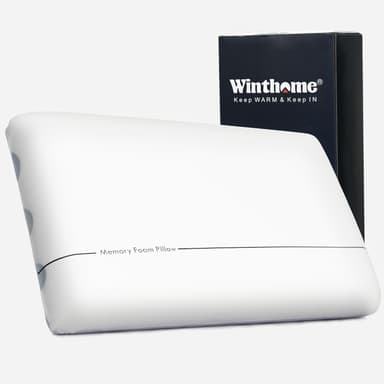
Winthome Winthome Memory Foam Pillow Two-Sided
Best for combination sleepers who want structured support.
Included for better heat control and overnight comfort consistency.
Approx. £21.24/item
#2 · Best value alternative
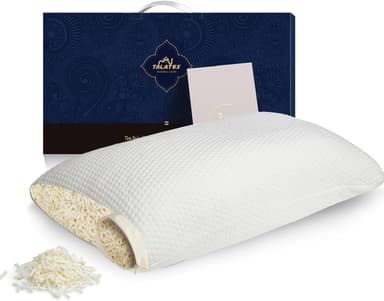
Talatex Talatex Adjusted Cervical Pillow
Best for side sleepers who want structured support.
Included for allergy-aware materials and easier maintenance.
Approx. £59.99/item
#3 · Best upgrade alternative
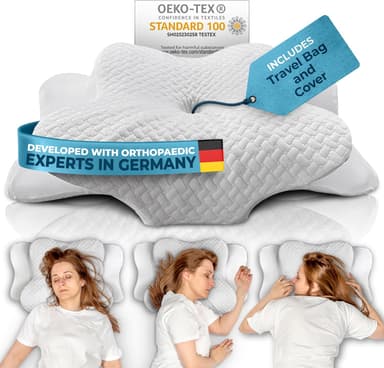
Glückstoff Glückstoff Orthopedic Neck Pillow
Best for multiple sleep positions who want structured support.
Included for allergy-aware materials and easier maintenance.
Approx. £69.9/item
Best Pillows for Neck and Shoulder Pain Compared
| Pillow | Fill | Firmness | Why Included | Price Check |
|---|---|---|---|---|
| Winthome Winthome Memory Foam Pillow Two-Sided | Memory Foam | medium | Included for better heat control and overnight comfort consistency. | Check current price |
| Talatex Talatex Adjusted Cervical Pillow | Latex | firm | Included for allergy-aware materials and easier maintenance. | Check current price |
| Glückstoff Glückstoff Orthopedic Neck Pillow | Memory Foam | firm | Included for allergy-aware materials and easier maintenance. | Check current price |
How we ranked these options
We rank these options by fit for shoulder pain, combining support profile, temperature behavior, and value for money. The goal is to improve sleep comfort and consistency first, then refine feel preferences.
- Your sleep position — side sleepers have the highest pillow-related shoulder pain risk
- Shoulder width and frame size — drives ideal loft
- Firmness — the pillow must resist compression
Quick Buy
Winthome Winthome Memory Foam Pillow Two-Sided
Built for structured shoulder and neck support.
We use Winthome here because shoulder pain pages need more structured support.
Approx. £21.24/item
Read full guide for this topic →Buy Winthome nowWant the full pillow overview?
If you want to compare the whole landscape before reading a specific guide, start with our central best pillow page.
Read: Best Pillow guide →How the matching quiz works
- Answer a few quick questions about how you sleep
- We match against pillows verified on UK Amazon, scoring on fit, temperature and budget
- Get a shortlist with reasons — not a single pushed product
Why pillows cause shoulder pain
The shoulder joint is supported by a network of muscles and tendons that work all day — sleep is when they rest. A poorly-matched pillow puts sustained tension on these structures for 6–8 hours. A too-low pillow lets the shoulder drop into the mattress, causing the upper arm to compress under head weight. A too-high pillow elevates the shoulder, keeping the supporting muscles in a shortened, tense state. The right loft keeps the shoulder neutral and the muscles relaxed.
Position-specific solutions
Side sleepers
Side sleepers are most vulnerable to shoulder pain from pillow height. The gap between the ear and the mattress must be filled precisely — usually 10–14 cm compressed loft depending on shoulder width. A pillow that's too soft or too low is the most common cause of side-sleeping shoulder pain. Firmness is as important as height; the pillow must resist compression under head weight.
Back sleepers
Back sleepers rarely experience shoulder pain from the pillow itself — their shoulders rest on the mattress and the pillow only supports the head. If a back sleeper has shoulder pain, it's more likely from mattress firmness or daytime posture than the pillow.
Combination sleepers
Combination sleepers who spend part of the night on their side are vulnerable when they roll onto that side. A medium-loft adjustable-fill pillow that adapts as they move is often the best solution.
Key factors for shoulder comfort
Loft is the primary factor — it must match your shoulder width and firmness of the mattress. Firmness is secondary — a soft pillow at the right height still won't provide shoulder support. Material is tertiary — almost any material works if the loft and firmness are correct. Many people waste money on speciality shoulder pillows when they simply need the right standard pillow for their build.
When a pillow won't fix it
If shoulder pain persists after switching to a correctly-lofted, firm side-sleeping pillow, or if pain is in the shoulder joint itself rather than the upper back and neck, see a GP or physiotherapist. The cause may be rotator cuff tension, bursitis, or another condition requiring assessment beyond pillow adjustment.
Ready to skip the research?
Answer a few quick questions and we'll match you to pillows that fit your build, position and budget.
Start the 2-minute quizWhat our quiz looks at
- Your sleep position — side sleepers have the highest pillow-related shoulder pain risk
- Shoulder width and frame size — drives ideal loft
- Firmness — the pillow must resist compression
- Mattress firmness — affects how much loft is needed
- Budget — effective shoulder-support pillows from £25 to £100 in the UK
Frequently asked questions
Can a pillow cause shoulder pain?
Yes — specifically a pillow that doesn't match your shoulder width and position. For side sleepers, a too-low or too-soft pillow lets the shoulder collapse, causing pain. A too-high pillow elevates and tenses the shoulder.
What pillow height is right for shoulder comfort?
For side sleepers, the pillow should fill the gap between ear and mattress such that your cervical spine stays in a neutral line from skull to mid-back. This is usually 10–14 cm compressed loft, but depends on shoulder width. A correctly-matched pillow is often immediately more comfortable.
Should a shoulder-pain pillow be firm or soft?
Firm. A soft pillow that feels comfortable for the first few minutes will compress flat under head weight, causing the shoulder to collapse into the mattress. Medium-firm to firm is necessary for sustained support.
Do speciality shoulder pillows work better than standard pillows?
Some speciality shoulder pillows are simply standard pillows with better loft and firmness for side sleepers. If a good-quality high-loft firm standard pillow resolves your shoulder pain, a speciality pillow may not add value. Try a correctly-matched standard pillow first.
Last reviewed: 16 June 2026. We update this guide when our verified pillow catalogue changes.
Generated with GitHub Copilot.